Muscle Composition Wiki
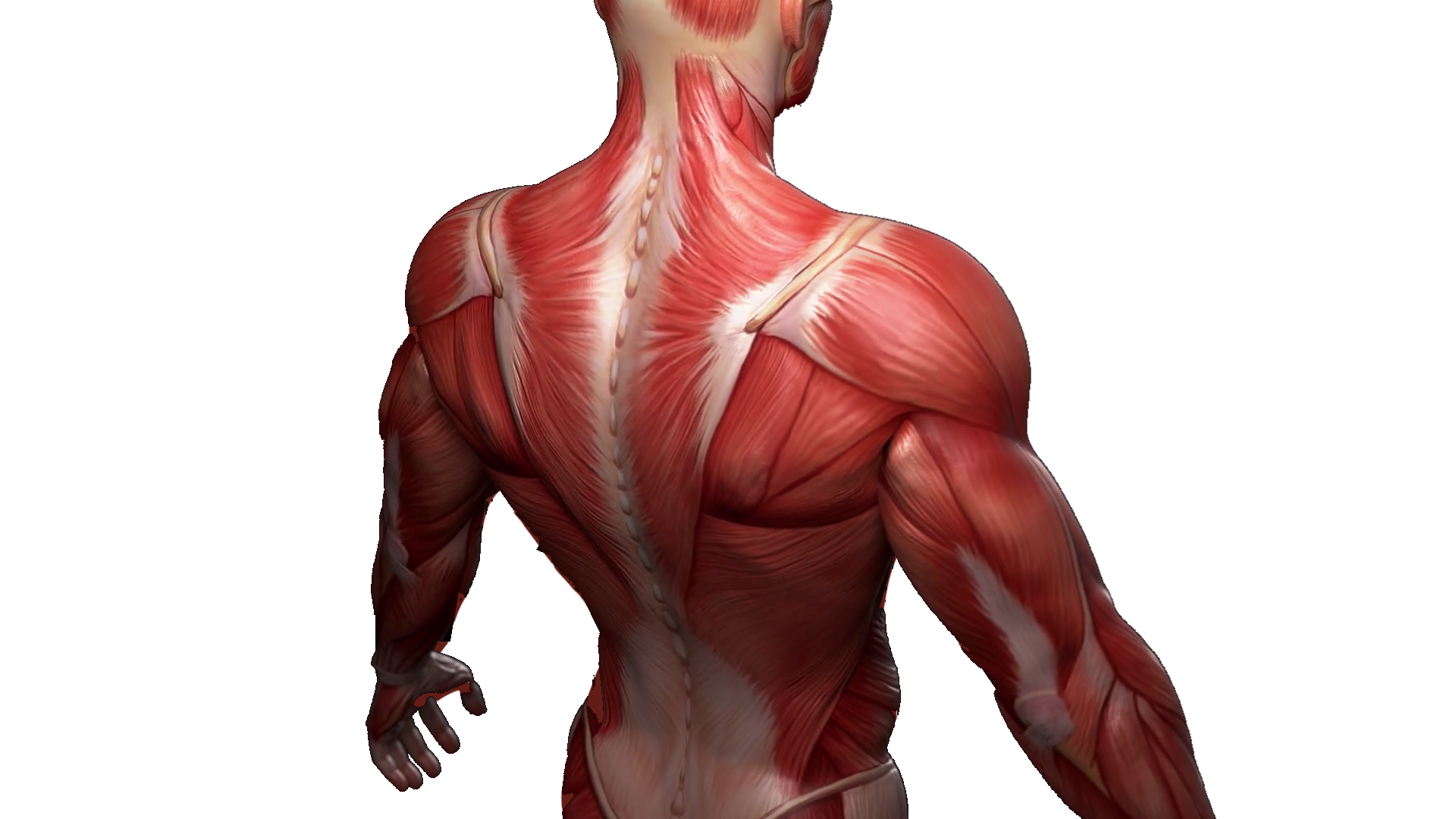
Introduction to back.png
This section will include six muscle groups:
- The deltoids
- Triceps
- Forearms
- Lower,
- Middle,
- And upper back
I chose to split the back into three groups rather than their individual muscles (Latissimus dorsi, Levator scapulae, Rhomboids, Trapezius, Serratus posterior superior, Serratus posterior inferior), since they are always trained together.
As usual, we will be covering their anatomy, functions as well as training insights.
Deltoids
The Deltoid muscle is a large triangular-shaped muscle that gives the shoulder its rounded contour. It is comprised of three distinct portions (anterior, middle, and posterior). The deltoid is a very powerful muscle and is used in many activities of daily living (e.g. putting clothes on, carrying shopping bags, washing hair) and many athletic activities (e.g. netball, swimming, water polo).
Another lesser known function of the deltoids as a whole is to prevent the dislocation of the humerus (upper arm) when someone lifts heavy loads. Have you ever performed heavy shrugs, deadlifts, or farmer's walks, and noticed that your delts look huge while you're doing them? It's because they're working hard to make sure that the weight you're lifting doesn't rip your arm out of your socket.
Due to their numerous functions, deltoids are involved in almost every upper body workout, and many lower body workouts as well. Since they are used so often, they are very easy to injure. It is very important to make sure you warm up and get blood flowing in your deltoids before you begin your workout so you can prevent injuries.
(The anterior head of the deltoid is used very often in pressing movements. This includes bench press, and other chest movements that move in a similar plane. Due to this, many people do not think that isolation work for the anterior deltoid is necessary.)
When training the deltoids through isolation work, most of people's time is spent on the lateral head. Training this part of the deltoid is what will give them that round look from the front, and will make them “pop”. This head is not worked during pressing movements to the extent that the anterior head is, so it's important to use isolation exercise to target it:
- Lateral dumbbell raises
- Behind the back lateral cable raises
Remember that the function of the lateral deltoid is to raise the arm, when it is internally rotated. For raises, it is very important to use light weight and perform these in a higher rep range (10+).
Many people believe that back training alone will target the posterior deltoid efficiently, but in order to fully develop the deltoid, you must work this head with isolation exercises. Neglecting posterior deltoid work can be detrimental to your shoulder health as well:
- Rear Delt Flys
- Face Pulls
Musculus triceps brachii
The triceps brachii is a large, thick muscle on the dorsal part of the upper arm. It often appears as the shape of a horseshoe on the posterior aspect of the arm. The main function of the triceps is the extension of the elbow joint. The Triceps brachii gets its name with tri referring to "three" muscle heads or points of origin (with Brachii referring to the arm). These include the: Medial head, Lateral head, and Long head.
Due to the diversity in muscle fibers that make up the triceps, it is very important to train them in low, medium, and high rep ranges to attain maximal growth (the medial head is used primarily for light/high rep exercises, the lateral head for heavy/low rep exercise, and the long head is used for all exercises).
It is recommended to use compound movements to target your triceps. This is because using heavy weights for isolation exercises (such as skull crushers) can be very detrimental to your elbow health. Use compound movements for your heavier triceps training. The best compound movements for triceps growth are:
- Close grip bench press
- Weighted dips
For your higher rep training, it is best to use isolation exercises. Favourites are:
- Cable pushdowns
- Skull crushers
- Overhead dumbbell extensions
Forearms
The forearm is the segment of the arm from the elbow to the wrist, containing two bones, the radius and ulna, and more than twenty muscles divided into anterior (flexor) and posterior (extensor) compartments. These muscles control wrist, elbow, and finger movements, enabling complex fine motor actions.
I don't think it's necessary to train forearms in isolation. A lot of biceps and back exercises will help you to train your forearms. Your forearms will be the limiting factor on a lot of your back/rowing exercises, especially when starting out, and they will just grow from doing those. However, I firmly believe that everyone should train their grip. It's great for forearm development, and it's one of the most functional aspects of strength that is rarely trained:
- Farmer's carry
- Deadlift
- Any exercise hanging from a pullup bar
Lower Back
The primary lower back muscles include the Erector Spinae, which extend and stabilize the spine; the Multifidus, deep muscles that stabilize the vertebrae; and the Quadratus Lumborum, which extends and side-bends the spine. Other significant muscles involved in lower back function are the Iliopsoas (hip flexor) and the Latissimus Dorsi, a large, flat muscle that helps with arm movement and trunk stability.
These muscles work in conjunction with ligaments and tendons to provide strength, stability, and controlled movement for the entire trunk, connecting the upper body to the pelvis and legs. Weakness in these core muscles, particularly the erector spinae and multifidus, can significantly contribute to lower back pain:
- Back extensions
- Squats
- Deadlifts
- Bridges/Hip Thrust
The stronger your glutes, the stronger your lower back.
Middle Back
The primary middle back muscles are the latissimus dorsi (lats), the rhomboids, and the middle trapezius. These muscles work together to stabilize the spine, retract and stabilize the shoulder blades, and assist in pulling and upper-body movements like rowing and pulling.
A stronger mid-back will help you maintain a more rigid and stable upper back during heavy pulls like deadlifts, carries, and rows. When you strengthen your middle back, you're better able to prevent rounding of your back under heavy loads. Keeping your back flat is important for injury prevention and for stronger pulls. Additionally, when your shoulders are retracted you can engage your lat muscles (your strongest back muscle) for pulling exercises, but when your shoulders are rounded forward because you lack mid back strength, you won't be able to engage your lats.
To train your middle back, perform targeted exercises like:
- Bent-over rows
- Deadlifts
- Pullups
Upper Back
The primary upper back muscles are the trapezius. The trapezius is a large, V-shaped muscle from the neck to the lower back. Its functions include shrugging, moving the shoulder blades, and extending the head.
The upper trapezius is a common area for pain and tightness, often caused by stress, tension, or poor posture from activities like desk work. To train your trapezius (trap) muscles, perform exercises like barbell shrugs, face pulls, deadlifts, and reverse flies to target different parts of the muscle and build strength. You can also use bodyweight exercises like pushups with a focus on shoulder movement. Remember to focus on proper form and light weights to ensure muscle activation and prevent injury.